Natural appetite suppressants, ranked by the evidence
Search "appetite suppressant, natural" and you get a wall of pills — glucomannan, green tea, Garcinia cambogia, chili extract — all promising the same thing. So which ones actually hold up in human trials, and which are mostly marketing? Here's the honest tier list: the free, food-based levers that earn the top tier, the handful of supplements with modest-but-real evidence, and the popular one the research quietly deflates. Every rating is linked to the study behind it.
The natural appetite suppressants with the strongest evidence aren't in a bottle — they're protein, viscous fiber, water/volume and sleep, because they raise your own fullness hormones.1234 A second tier has modest, real effects: green tea catechins with caffeine,6 capsaicin from chili,7 and glucomannan fiber (modest and inconsistent).8 And the hyped one — Garcinia cambogia — shows a weight effect so small that reviewers call its clinical relevance questionable.9 Bioactive salmon peptides are studied for the same GLP-1 fullness pathway the top tier works on. Education, not medical advice; results vary.
On this page
How we ranked them
A "natural appetite suppressant" is only worth your money if it does one of two things in real people: makes you eat less at the next meal, or keeps you fuller for longer. So each item below is graded on the human evidence — systematic reviews and meta-analyses of controlled trials, not test-tube studies or a single funded trial. Three tiers: A = strong, consistent human evidence (and free); B = modest but real effects; C = popular but the evidence is thin or the effect is too small to matter. Where an effect exists, we say how big it actually is — because "statistically significant" and "worth doing" aren't the same thing.
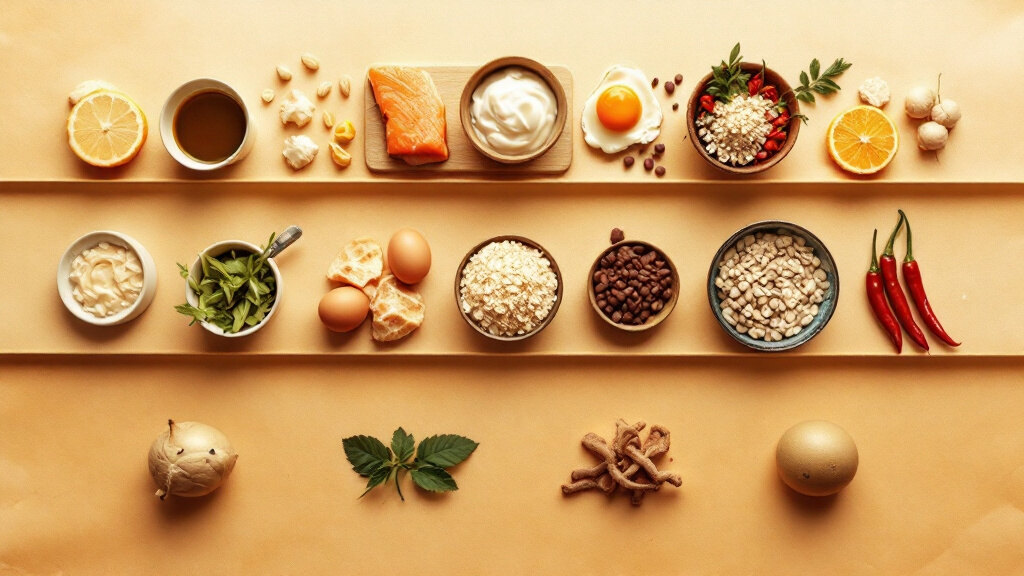
Tier A — the ones that actually work
These share one trait: they turn up the fullness signals your gut and brain already use (GLP-1, PYY, CCK), and the human evidence behind them is the strongest in this whole category.
Protein
The single strongest lever. A meta-analysis of controlled human trials found protein lowered hunger and the desire to eat and raised fullness, tracking with those gut hormones.1 Put it first at every meal — eggs, fish, Greek yogurt, lean meat, beans.
Viscous (soluble) fiber
Gel-forming fiber from oats, beans, psyllium and konjac slows stomach emptying so fullness lasts. A systematic review found soluble fiber cut energy intake and appetite far more than insoluble fiber.2
Water & volume
Your stomach registers how much you ate. High-water, low-calorie foods — soup, fruit, vegetables — fill it for almost no calories; low energy density was one of the properties that tracked with satiety when researchers measured how filling foods are.3
Sleep
The one everyone skips. In a randomized crossover trial, short sleep increased appetite, sweet-taste preference and food intake.4 No pill offsets a chronic sleep deficit — and protecting 7–9 hours makes every lever above work better.
"The best 'natural appetite suppressant' isn't the exotic one in the ad — it's the boring free stuff with the strongest science behind it."
Tier B — modest, but real
These have genuine human data, just smaller effects. Reasonable to try; unreasonable to expect miracles.
Green tea catechins + caffeine
A systematic review and meta-analysis found green tea catechins with caffeine produced statistically significant but modest reductions in body weight and waist circumference, with the effect partly driven by caffeine.6 A cup of green tea is a low-risk, low-calorie habit — just don't expect the pill version to melt appetite.
Capsaicin (chili / cayenne)
The compound that makes chili hot. A meta-analysis of energy-intake trials found capsaicinoids eaten before a meal reduced how much people ate by about 74 calories at that meal.7 Real, measurable, and free if you just cook spicier — a small nudge, not a transformation.
Glucomannan (konjac fiber, as a supplement)
Glucomannan is the viscous fiber from Tier A in capsule form — it swells into a gel that slows gastric emptying. But as a supplement the weight evidence is modest and inconsistent: one systematic review of randomized trials found no statistically significant weight difference versus placebo.8 Getting viscous fiber from whole food beats the pill.
Try triGLP
triGLP is bioactive salmon protein hydrolysate in clean, sublingual drops — a dietary supplement made to support the natural GLP-1 fullness signaling your body already uses.
Get triGLP// ships from the official ORYGN storefront · dietary supplement · not a drug · results vary
Tier C — the overhyped ones
Garcinia cambogia (hydroxycitric acid)
Probably the most-marketed "natural appetite suppressant" of the last decade. When researchers pooled the randomized trials, HCA showed a difference of under 1 kg versus placebo — an effect that vanished when only the most rigorous trials were counted, leading the reviewers to call its clinical relevance questionable.9 Popular does not equal proven.
Most "proprietary blend" pills
Many OTC appetite pills lean on stimulants (which disrupt sleep and backfire on appetite4) or on ingredients with little human data at the doses used — and they hide the amounts inside a "proprietary blend." Thin evidence, and, as the next section shows, sometimes worse than thin.
The "all natural" trap
The biggest risk in this category isn't a weak pill — it's a spiked one. The FDA repeatedly finds weight-loss and "appetite suppressant" products sold as natural supplements that are secretly laced with hidden prescription drugs, including sibutramine, a stimulant pulled from the market for raising blood pressure and heart rate.5 "All natural" on the label is a marketing phrase, not a lab result. Favor products with fully transparent ingredients and honest structure/function claims — and build the Tier A levers first.
Where salmon peptides fit
The thread running under all of Tier A is your body's own GLP-1 fullness pathway — the signal protein raises and fiber-rich meals support. That's exactly the pathway bioactive salmon peptides (salmon protein hydrolysate) are studied for: in laboratory studies, salmon-derived peptides activated the GLP-1 and GIP receptors involved in satiety,10 and food proteins and their hydrolysates are an active area of GLP-1 research for the same reason.11 So a supplement like triGLP is designed to support the same fullness signaling the top tier works on — a food-derived nudge, not a drug and not a replacement for protein, fiber, volume and sleep. See our natural appetite suppressant and best appetite suppressant guides for the deeper version.
The honest limits
No food, supplement, or pill "suppresses" appetite on command — it's a system that varies a lot person to person. The strongest, safest evidence sits with the free Tier A stuff; the Tier B supplements have small effects; Tier C is mostly marketing. Never assume "all natural" means drug-free — the FDA can only test a fraction of what's sold.5 Salmon-peptide research on the GLP-1 pathway is genuinely interesting but early (mostly laboratory studies). Salmon peptides are a dietary supplement, not a medicine — they don't diagnose, treat, cure, or prevent any condition, and won't override appetite on their own. Anyone with a fish allergy should avoid them. If appetite feels impossible to control or is tied to a medical condition, talk to a clinician — this page is educational, not medical advice. Results vary.
Common questions
What is the best natural appetite suppressant?
By the human evidence, it's protein — in controlled trials it lowers hunger and raises fullness through your own GLP-1, PYY and CCK signals. Pair it with viscous (soluble) fiber, water-rich low-calorie foods, and 7–9 hours of sleep. Those four "Tier A" levers beat any supplement in this category, and they're free. Results vary.
Does Garcinia cambogia actually work?
Barely. When researchers pooled the randomized trials, Garcinia's hydroxycitric acid showed under a 1 kg difference versus placebo — an effect that disappeared in the most rigorous trials, which is why the reviewers called its clinical relevance questionable. It's one of the most-marketed "natural" suppressants and one of the least convincing. Results vary.
Do green tea or chili really suppress appetite?
Modestly. Green tea catechins with caffeine produce small, statistically significant reductions in body weight in meta-analyses, and capsaicin (the heat in chili) cut energy intake by about 74 calories when eaten before a meal in a meta-analysis. Both are low-risk, low-calorie habits — helpful nudges rather than the main event. Results vary.
Is glucomannan a good appetite suppressant?
It's viscous fiber in capsule form, so the mechanism is real — it swells into a gel that slows stomach emptying. But as a supplement the weight evidence is modest and inconsistent, with at least one systematic review finding no significant difference versus placebo. Getting viscous fiber from whole foods (oats, beans, psyllium) is the better play. Results vary.
How do salmon peptides fit in?
They're studied because, in laboratory studies, salmon peptides activated the GLP-1 and GIP receptors involved in satiety — the same pathway protein and fiber support. So they're positioned to support natural fullness signaling as a dietary supplement with transparent ingredients, not to work like a drug or replace the Tier A levers. The science is early; results vary.
Are "all natural" appetite suppressant pills safe?
Not automatically. The FDA repeatedly finds weight-loss and appetite products sold as natural supplements that are secretly spiked with hidden prescription drugs like sibutramine. "All natural" is a label claim, not a safety guarantee. Favor transparent ingredients and honest structure/function claims, and if you're pregnant, nursing, or on medication, talk to a clinician first. Results vary.
References
- Effect of short- and long-term protein consumption on appetite and appetite-regulating gastrointestinal hormones: a systematic review and meta-analysis of randomized controlled trials. (PubMed/NIH). pubmed.ncbi.nlm.nih.gov/32768415
- Unravelling the Effects of Soluble Dietary Fibre Supplementation on Energy Intake and Perceived Satiety in Healthy Adults: a Systematic Review and Meta-Analysis of Randomised-Controlled Trials. Nutrients (PMC/NIH). ncbi.nlm.nih.gov/pmc/articles/PMC6352252
- A Satiety Index of common foods. Holt SHA, et al. Eur J Clin Nutr. 1995;49(9):675–690 (PubMed/NIH). pubmed.ncbi.nlm.nih.gov/7498104
- Acute Sleep Curtailment Increases Sweet Taste Preference, Appetite and Food Intake in Healthy Young Adults: A Randomized Crossover Trial. (PMC/NIH). ncbi.nlm.nih.gov/pmc/articles/PMC7071396
- Avoiding Products Contaminated with Hidden Ingredients / Tainted Weight Loss Products. U.S. Food & Drug Administration (FDA.gov). fda.gov/drugs/medication-health-fraud/avoiding-products-contaminated-hidden-ingredients
- Effect of green tea catechins with or without caffeine on anthropometric measures: a systematic review and meta-analysis. Am J Clin Nutr (PubMed/NIH). pubmed.ncbi.nlm.nih.gov/19906797
- Could capsaicinoids help to support weight management? A systematic review and meta-analysis of energy intake data. Appetite (PubMed/NIH). pubmed.ncbi.nlm.nih.gov/24246368
- The effect of glucomannan on body weight in overweight or obese children and adults: a systematic review of randomized controlled trials. Nutrition (PubMed/NIH). pubmed.ncbi.nlm.nih.gov/25701331
- The Use of Garcinia Extract (Hydroxycitric Acid) as a Weight Loss Supplement: A Systematic Review and Meta-Analysis of Randomised Clinical Trials. Onakpoya I, et al. J Obes. 2011 (PubMed/NIH). pubmed.ncbi.nlm.nih.gov/21197150
- Initial Exploration of the In Vitro Activation of GLP-1 and GIP Receptors and Pancreatic Islet Cell Protection by Salmon-Derived Bioactive Peptides. Marine Drugs, 2024;22(11):490 (PMC/NIH). ncbi.nlm.nih.gov/pmc/articles/PMC11595994
- Glucagon-like peptide-1 regulation by food proteins and protein hydrolysates. Review, 2021 (PubMed/NIH). pubmed.ncbi.nlm.nih.gov/33461642