How to reduce sugar cravings naturally
Here's what most advice misses: a sugar craving is usually a signal, not a character flaw — often a blood-sugar dip a couple of hours after a meal, a short night's sleep, or a well-worn habit talking. That's why willpower alone fails, and why the fixes that actually work steady the signal rather than fight it. Below are the natural levers with real evidence: flattening the blood-sugar swings, leading with protein and fiber, swapping the sweet default, and protecting your sleep — plus where salmon peptides fit. No hype, every claim linked.
You crave sugar mostly because of blood-sugar swings, short sleep, and habit — not weak willpower. In a large study, the people who had the biggest blood-sugar dip 2–3 hours after eating were hungrier and ate hundreds more calories over the day.1 So the levers that work are: steady your blood sugar (pair carbs with protein, fiber and fat; don't skip meals), lead with protein to raise your own fullness hormones, swap the sweet snack for one built on protein and fiber, and protect your sleep — because short sleep measurably increases the pull toward sweets.4 Bioactive salmon peptides are studied because they may support that same GLP-1 fullness pathway. Honest caveat: cravings are personal and stubborn — there's no off-switch. This is education, not medical advice; results vary.
On this page
Why you crave sugar — and why it's usually a signal, not weakness
A sugar craving rarely comes out of nowhere. One of the most common triggers is a blood-sugar dip: eat a fast-digesting, low-protein meal and your blood sugar spikes, then dips below baseline a couple of hours later — and your body reads that dip as "eat now," usually for something sweet or starchy. In a study of over 1,000 people eating more than 8,000 standardized breakfasts, those with the biggest 2–3-hour glucose dips felt hungrier, ate sooner, and consumed roughly 300 more calories over the next 24 hours than those with the smallest dips.1 Add a short night's sleep or a stressful day, and the pull toward sweets gets stronger still.4 The good news: each of these is a lever you can pull — and none of them is about gritting your teeth harder.
Lever 1: Steady your blood sugar
Since the after-meal dip is one of the strongest craving triggers,1 the highest-leverage move is to flatten the curve so it never crashes. You don't have to give up carbs — you have to slow them down:
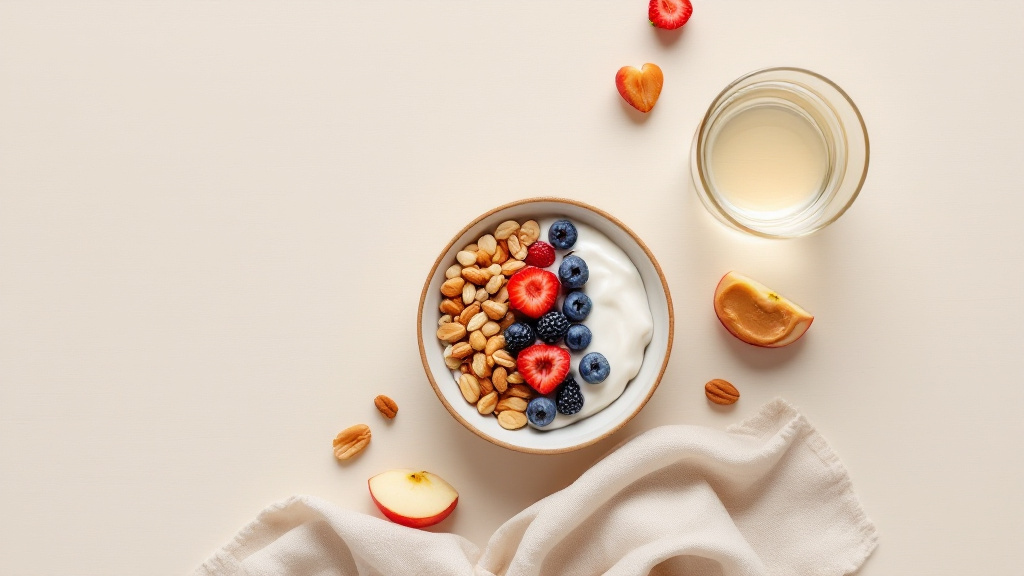
- Pair carbs with protein, fiber and fat. An apple with nut butter, oatmeal with eggs, rice with beans and vegetables — the protein and fiber blunt the spike, so there's no deep dip to trigger a craving.
- Don't skip meals. Arriving at 3 p.m. ravenous almost guarantees a fast, sweet fix. A steady, protein-anchored rhythm keeps the swings shallow.
- Start meals with the protein and vegetables. Eating the fast carbs last tends to lower the glucose spike that sets up the later dip.
"A sugar craving is often just a blood-sugar dip wearing a disguise. Flatten the dip and the craving loses its voice."
Lever 2: Lead with protein & fiber
Protein is the strongest biological lever against cravings, because it raises your body's own fullness hormones — GLP-1, PYY and CCK — that quiet the drive to eat. A meta-analysis of controlled trials found protein lowered hunger and the desire to eat and raised fullness, tracking with those gut hormones.2 Fiber helps too: it slows digestion and, with protein, keeps blood sugar steadier. Practical version: build meals and snacks around protein and fiber first, and the sweet pull an hour later gets a lot quieter.
Try triGLP
triGLP is bioactive salmon protein hydrolysate in clean, sublingual drops — a dietary supplement made to support the natural GLP-1 fullness signaling your body already uses.
Get triGLP// ships from the official ORYGN storefront · dietary supplement · not a drug · results vary
Lever 3: Swap the sweet snack
You won't always beat the urge — so make the thing you reach for work in your favor. When people replaced their usual between-meal snacks with tree nuts, food cravings dropped and diet quality improved, with a notable reduction in the pull toward sweet foods specifically.3 The principle generalizes: a snack built on protein and fiber (nuts, Greek yogurt, a boiled egg, fruit with nut butter) satisfies and steadies blood sugar, so it tends to end the craving instead of feeding the cycle. Keep the good default easy to grab and the sweets harder to reach.
Lever 4: Protect your sleep (and tame stress)
This lever is invisible but powerful. In a randomized crossover trial, cutting sleep short increased sweet-taste preference, appetite and food intake in healthy adults — your brain literally finds sugar more appealing when you're underslept.4 Chronic stress pushes the same direction, nudging you toward quick, sweet comfort food. So the "boring" levers matter as much as anything on your plate:
- Aim for 7–9 hours of sleep. It's one of the most underrated craving fixes there is.
- Have a stress outlet that isn't food. A short walk, a few minutes of breathing, or stepping outside can take the edge off the urge.
- Add a delay. When a craving hits, wait 10 minutes and drink some water — many cue-driven cravings fade once the moment passes.
Where salmon peptides fit
The through-line under these levers is your body's own GLP-1 fullness pathway — the signal that protein raises, that steady blood sugar supports, and that helps tell your brain you've had enough. That's exactly the pathway bioactive salmon peptides (salmon protein hydrolysate) are studied for: in laboratory studies, salmon-derived peptides activated the GLP-1 and GIP receptors involved in satiety,6 and food proteins and their hydrolysates are an active area of GLP-1 research for exactly this reason.5 So the idea behind a supplement like triGLP is to support the same fullness signaling that protein and steady blood sugar work on — a food-derived nudge to help the sweet urge feel less urgent, not a drug and not a substitute for the habits above. It's one tool in the stack. See our how to stop food cravings naturally and foods that boost GLP-1 pages for the deeper dive.
How strong is the evidence?
- Blood-sugar dips drive hunger & intake — strong. The largest 2–3-hour glucose dips predicted more hunger and ~300 extra daily calories across 1,000+ people.1
- Protein → satiety hormones — strong and consistent. Human trials show protein raises GLP-1/PYY/CCK and lowers hunger and the desire to eat.2
- Swapping in nuts cuts sweet cravings — supportive. A controlled trial found daily tree-nut snacks reduced cravings and improved diet quality.3
- Short sleep raises the sweet pull — supportive. A randomized crossover trial showed sleep curtailment increased sweet-taste preference, appetite and intake.4
- Salmon peptides on the GLP-1 pathway — early. Real laboratory receptor activity;6 supportive, not proof of a craving effect in you.
The honest limits
No supplement, food, or trick "kills" sugar cravings on command — cravings are a habit-and-biology system that varies hugely person to person, and blood-sugar responses to the same meal differ from one person to the next. The strongest evidence sits with the boring, free stuff: steady your blood sugar, lead with protein and fiber, protect your sleep. Salmon-peptide research on the GLP-1 pathway is genuinely interesting but early (mostly laboratory studies). Salmon peptides are a dietary supplement, not a medicine — they don't diagnose, treat, cure, or prevent any condition, and they won't override a habit on their own. Anyone with a fish allergy should avoid them. If cravings feel compulsive, are tied to low mood, or are part of disordered eating, please talk to a clinician — this page is educational, not medical advice. Results vary.
Common questions
What's the fastest way to reduce sugar cravings?
Steady your blood sugar. A sugar craving is often a blood-sugar dip a couple of hours after a fast, low-protein meal — so pair carbs with protein, fiber and fat, don't skip meals, and lead meals with protein and vegetables. In the moment, add a 10-minute delay and drink water; many cue-driven cravings fade once the moment passes. No single trick works for everyone; results vary.
Why do I crave sugar so much?
Usually because of blood-sugar swings, short sleep, or habit — not weak willpower. Research shows the people with the biggest post-meal glucose dips get hungrier and eat more, and that cutting sleep short increases the appeal of sweet foods. Fixing those signals — steadier blood sugar, more protein, better sleep — beats relying on willpower. Results vary.
Does eating protein reduce sugar cravings?
It helps a lot. Protein raises your body's own fullness hormones (GLP-1, PYY, CCK) and, paired with fiber, blunts the blood-sugar spike-and-dip cycle that triggers sweet cravings. Anchoring meals and snacks with protein makes the sweet pull an hour later much quieter. Results vary.
Can poor sleep cause sugar cravings?
Yes. In a randomized crossover trial, cutting sleep short increased sweet-taste preference, appetite and food intake in healthy adults — your brain finds sugar more appealing when you're underslept. Protecting 7–9 hours of sleep is one of the most underrated ways to calm cravings. Results vary.
How do salmon peptides fit into reducing sugar cravings?
Calming cravings works largely by supporting your body's GLP-1 fullness signal. Salmon peptides are studied because, in laboratory studies, they activated the GLP-1 and GIP receptors involved in satiety — the same pathway protein and steady blood sugar support. So they're positioned to support natural fullness signaling as a dietary supplement, to help the sweet urge feel less urgent — not to work like a drug or replace the habits. The science is early; results vary.
Is it bad to eat any sugar at all?
No — the goal isn't zero sugar, it's fewer of the automatic, cue-driven cravings and a steadier baseline. A little sweetness alongside protein and fiber (fruit with yogurt, for example) lands very differently than sugar on an empty, spiking stomach. The aim is to break the spike-crash-crave cycle, not to fear a dessert. Results vary.
References
- Postprandial glycaemic dips predict appetite and energy intake in healthy individuals. Nature Metabolism, 2021 (PubMed/NIH · PREDICT study). pubmed.ncbi.nlm.nih.gov/33846643
- Effect of short- and long-term protein consumption on appetite and appetite-regulating gastrointestinal hormones: a systematic review and meta-analysis of randomized controlled trials. (PubMed/NIH). pubmed.ncbi.nlm.nih.gov/32768415
- Consuming Tree Nuts Daily as Between-Meal Snacks Reduces Food Cravings and Improves Diet Quality in American Young Adults at High Metabolic Syndrome Risk. (PMC/NIH). ncbi.nlm.nih.gov/pmc/articles/PMC12694199
- Acute Sleep Curtailment Increases Sweet Taste Preference, Appetite and Food Intake in Healthy Young Adults: A Randomized Crossover Trial. (PMC/NIH). ncbi.nlm.nih.gov/pmc/articles/PMC7071396
- Glucagon-like peptide-1 regulation by food proteins and protein hydrolysates. Review, 2021 (PubMed/NIH). pubmed.ncbi.nlm.nih.gov/33461642
- Initial Exploration of the In Vitro Activation of GLP-1 and GIP Receptors and Pancreatic Islet Cell Protection by Salmon-Derived Bioactive Peptides. Marine Drugs, 2024;22(11):490 (PMC/NIH). ncbi.nlm.nih.gov/pmc/articles/PMC11595994