What are bioactive peptides?
They sound like something out of a lab. In plain terms, they're tiny protein fragments that act like little messengers in the body — and a growing body of research is looking at what specific ones do, including some from fish and salmon. Here's the honest version, cited and jargon-free.
A bioactive peptide is a short chain of amino acids — usually just 2 to 20 of them — that gets released from a larger food protein and then has some measurable effect on the body. Depending on the peptide, that effect can be antioxidant, blood-pressure-lowering, antimicrobial, or appetite-signaling. Think of them as small, specific instructions cut out of an ordinary protein.1
On this page
The short version
Every protein you eat — from an egg, a glass of milk, a fillet of salmon — is a long, folded chain of amino acids. When that protein is broken down, either by your own digestion or by an enzyme in a lab, it snaps into much shorter pieces. Most of those pieces are just fuel. But some short sequences, once freed from the parent protein, turn out to do something — they fit into a receptor, block an enzyme, or nudge a signal. Those are the ones scientists call bioactive peptides.13
The key idea: a bioactive peptide is not a drug and not a vitamin. It's a natural fragment of a food protein that happens to carry a biological message.
"Locked inside an ordinary protein are short sequences that, once released, can act on the body. That's the whole idea."
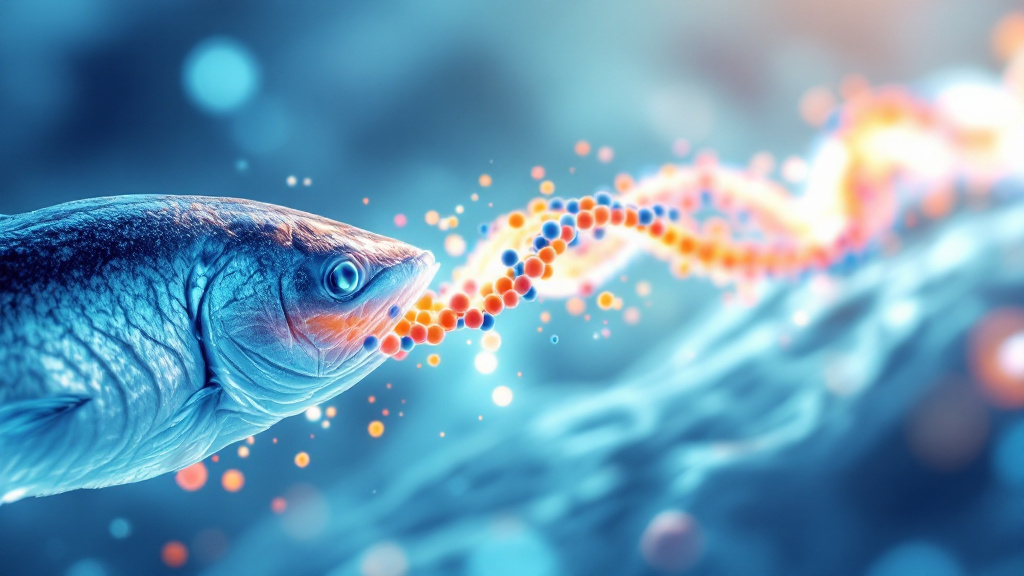
Where they come from
Bioactive peptides have been identified from a wide range of everyday food proteins — dairy, egg, soy, cereal grains, meat, and marine sources like fish.12 They're typically released in one of three ways:
- Digestion — your gut enzymes cut them out of food as you break it down.
- Enzymatic hydrolysis — a controlled process (the one used to make ingredients like salmon protein hydrolysate) that pre-cuts the protein into consistent peptides.3
- Fermentation — microbes do the cutting, as in aged cheese or cultured products.
The reason "hydrolysate" shows up on supplement labels is exactly this: it means the protein has already been broken into peptides, so the useful fragments are ready rather than buried inside a whole protein.
What they actually do
Different peptides have different jobs. Across the research literature, food-derived bioactive peptides have been studied for several activities, including:
- Antioxidant — helping neutralize reactive molecules.1
- Antihypertensive (blood pressure) — some peptides inhibit an enzyme called ACE, the same target many blood-pressure medications act on. These are among the best-documented food peptides.13
- Antimicrobial and immune-modulating — interacting with the body's defenses.2
- Metabolic and appetite-signaling — the newest and most talked-about area, and the one most relevant to salmon peptides (below).4
One important nuance: a single peptide can carry more than one of these activities at once, which is part of why they're interesting to researchers.2
The salmon angle
Marine proteins — fish, and fish co-products in particular — have become a major source of studied bioactive peptides.2 Salmon is one of them. Researchers working with Atlantic salmon (Salmo salar) protein hydrolysates have identified peptide fractions with metabolic activity in laboratory models, describing them as a potential source of "antidiabetic" peptides — meaning peptides that influenced insulin and gut-hormone signaling in cell studies.6
That's why the ingredient behind these drops is a salmon protein hydrolysate rather than plain salmon protein: the point is the pre-released peptide fragments, not the fish protein as food.
Peptides & appetite — the GLP-1 connection
GLP-1 is a hormone your own gut releases after you eat. It's one of the signals that tells your brain you're satisfied and helps manage blood sugar. It's also the hormone that a well-known class of prescription weight medications imitates.
Here's where fish peptides get interesting. In laboratory (cell-culture) studies, fish protein hydrolysates have been shown to increase the body's own GLP-1 secretion.5 Salmon-derived hydrolysates specifically enhanced GLP-1 release in enteroendocrine cell models.6 And in a small human study, a fish protein hydrolysate influenced appetite hormones (CCK and GLP-1) alongside changes in body weight and composition.4 A separate human trial found a cod protein hydrolysate affected the appetite hormone ghrelin after eating.7
The distinction that matters: these peptides are being studied for their ability to support your body's own GLP-1 signaling — not to replace or inject the hormone. That's a very different mechanism from a prescription drug, and the research is still early.
Salmon peptides you can actually take
triGLP puts bioactive salmon peptides into four clean, sublingual ingredients — a drop under the tongue, not a needle. The science on this page is the "why" behind it.
See the triGLP drops// ships from the official ORYGN storefront · dietary supplement · not a drug · results vary
What the research doesn't say
Honesty is the whole point of this page, so here's the other side. Much of the peptide research above is in cell cultures or animal models, and the human studies are small and preliminary. Promising signals in a lab are not the same as a guaranteed result in a person. Bioactive peptides are a dietary supplement ingredient, not a medicine — they are not a treatment for obesity, diabetes, or any disease, and individual results vary. Anyone managing a health condition should make decisions based on their own situation. We give you the sources so you can read them yourself.
Common questions
What are the benefits of bioactive peptides?
Depending on the specific peptide, food-derived bioactive peptides have been studied for antioxidant activity, blood-pressure support (via ACE inhibition), antimicrobial and immune effects, and — more recently — metabolic and appetite-signaling effects such as supporting GLP-1 release. Benefits are peptide-specific and still being researched; they are not guaranteed, and results vary.
Are bioactive peptides the same as collagen peptides or protein powder?
Not quite. All are protein-derived, but "protein powder" is mostly whole protein for building material, and "collagen peptides" are fragments of collagen aimed at skin and joints. "Bioactive peptides" is the broader category for short fragments studied for a specific biological action — like the appetite-signaling salmon peptides discussed here.
Are bioactive peptides safe?
Food-derived peptides come from ordinary dietary proteins and are generally consumed as foods and supplements. That said, this is educational information, not medical advice — if you're pregnant, nursing, taking medication, or managing a health condition, base your decision on your own circumstances.
How do salmon peptides relate to GLP-1?
In laboratory and small human studies, fish and salmon protein hydrolysates have been shown to stimulate the body's own release of GLP-1 — a natural gut hormone tied to fullness and blood-sugar control. The research explores supporting that natural signal, which is different from a prescription drug that mimics the hormone. See references 4–6 below.
References
- A Review on Health-Promoting, Biological, and Functional Aspects of Bioactive Peptides in Food Applications. Biomolecules, 2021;11(5):631. ncbi.nlm.nih.gov/pmc/articles/PMC8145060
- Bioactivities, Applications, Safety, and Health Benefits of Bioactive Peptides From Food and By-Products: A Review. Frontiers in Nutrition, 2021. frontiersin.org/articles/10.3389/fnut.2021.815640
- Bioactive peptides: A review. Food Quality and Safety, 2017;1(1):29–46. academic.oup.com/fqs/article/1/1/29/4791729
- Supplementation with a fish protein hydrolysate (Micromesistius poutassou): effects on body weight, body composition, and CCK/GLP-1 secretion. Food & Nutrition Research, 2016;60:29857. ncbi.nlm.nih.gov/pmc/articles/PMC4734037
- Blue Whiting Protein Hydrolysates Increase GLP-1 Secretion and Proglucagon Production in STC-1 Cells. Nutrients, 2022. ncbi.nlm.nih.gov/pmc/articles/PMC8877066
- Atlantic salmon (Salmo salar) co-product-derived protein hydrolysates: A source of antidiabetic peptides. Food Research International, 2018. sciencedirect.com/science/article/abs/pii/S0963996918300255
- Acute effect of a cod protein hydrolysate on postprandial acylated ghrelin concentration and sensations associated with appetite in healthy subjects. Food & Nutrition Research, 2019. ncbi.nlm.nih.gov/pmc/articles/PMC6814894