Natural peptides for weight loss
"Natural peptides" are just protein fragments — tiny pieces of the protein in foods like fish, milk, and beans. Some of them can talk to the same fullness hormones that govern your appetite. Here's what the published research actually shows about food-derived peptides and weight: the real mechanism, the honestly-mixed human evidence, and where the limits are — with sources.
Natural (food-derived) peptides are protein fragments that can gently support the appetite side of weight management — mostly by nudging the gut's own fullness hormones like CCK, GLP-1, and PYY.12 Marine and fish protein peptides are among the most studied for this, and small human trials have shown modest satiety and hormone effects.56 But the human evidence is early and mixed, the effects are modest, and no food peptide replicates a prescription weight-loss drug. These are supportive tools alongside diet and activity — not a treatment. Results vary.
On this page
What "natural peptides" actually are
A peptide is simply a short chain of amino acids — a small piece of a protein. When you eat or digest protein, or when a food is treated with enzymes (a process called hydrolysis), the big protein molecules get broken into these smaller fragments. Some of those fragments do more than feed you: they're bioactive, meaning they can interact with cells and signals in your body.13 That's what people mean by "natural peptides for weight loss" — not a lab drug, but protein-derived fragments from real foods (fish, dairy, egg, soy, pea and others) that have been studied for a gentle effect on appetite.1
"A natural peptide isn't a shortcut around your biology — it's a message written in the same language your gut already speaks."
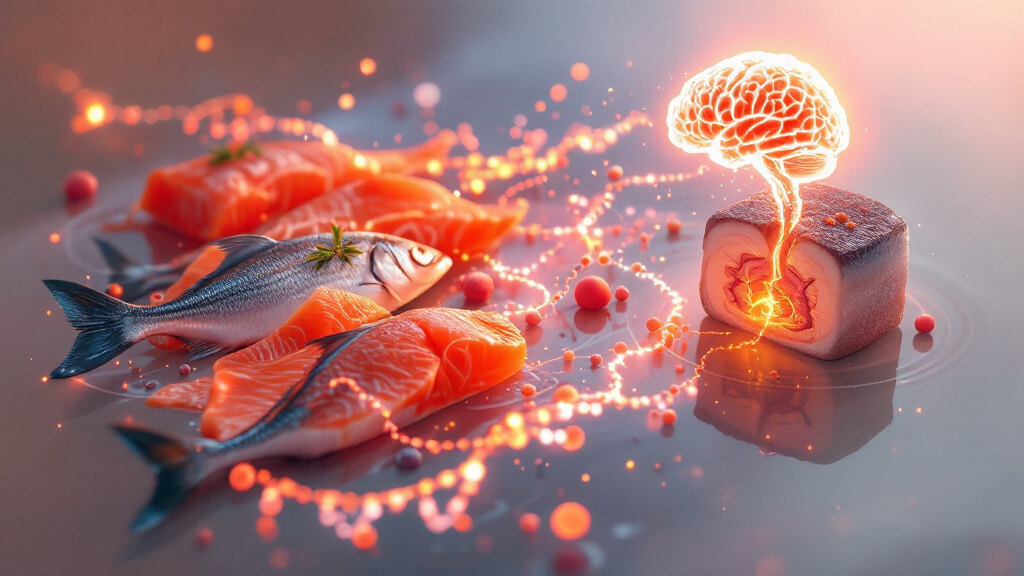
How they could help with weight
Weight is mostly about energy balance, and one of the hardest parts of eating less is appetite. This is where food peptides come in. Research reviews describe how amino acids and peptides interact with receptors on the gut's enteroendocrine cells and trigger the release of "I'm full" hormones — chiefly cholecystokinin (CCK), glucagon-like peptide-1 (GLP-1), and peptide YY (PYY).12 Those hormones slow stomach emptying and signal fullness to the brain, which can mean smaller portions and less snacking.3 In animal work, a fish protein hydrolysate even lowered the brain's appetite-driving signals (neuropeptide Y and agouti-related protein) and reduced weight gain — a mechanistic hint at the same appetite pathway.8
Which food peptides are studied
Not all protein is equal here — the source and how it's broken down matter.1
- Fish & marine peptides: the most studied group for appetite. Fish protein has produced greater fullness than beef in a controlled comparison, and specific fish protein hydrolysates (cod, boarfish, blue whiting) have been tested in humans for satiety and gut-hormone effects.745
- Dairy peptides: whey and casein fragments are strong, well-documented triggers of satiety hormones.1
- Plant peptides: soy, pea, and other plant proteins yield peptides that stimulate satiety-hormone secretion in lab and animal studies.2
Across the literature, a commonly cited effective range for fish protein hydrolysate in humans is roughly 1–6 grams per day — a food-sized amount, not a mega-dose.5
Where salmon peptides fit
triGLP is a dietary supplement built on bioactive salmon peptides — the marine, food-derived protein fragments studied for supporting the body's own fullness signaling. It's designed to sit alongside a sensible diet and activity, not to replace them or act like a drug.
See the triGLP drops// ships from the official ORYGN storefront · dietary supplement · not a drug · results vary
What the human studies really show
Here's the honest picture, because this topic attracts a lot of hype. The human trials on food peptides and appetite are small, short, and mixed:
- Some are positive. A boarfish protein hydrolysate raised satiety ratings by about 11% at three hours versus a control drink, and 90 days of a blue-whiting fish protein hydrolysate increased fasting CCK and GLP-1 and improved body-composition measures compared with placebo.56
- Some are null. Other trials of fish protein hydrolysate found no significant difference from placebo in hunger ratings or appetite hormones over the study window.4
So the fair summary is: the mechanism is real and well-mapped, several small human studies are encouraging, but the evidence base is still early and not consistent. Think of food peptides as a modest, promising support — worth combining with the basics that reliably work (protein at meals, fiber, movement), not a stand-alone answer.1
Natural peptides vs. GLP-1 drugs
This is the comparison people really want, so let's be blunt about it. Prescription GLP-1 medications are drugs — engineered, injected, dosed to strongly activate the GLP-1 receptor, and backed by large human clinical trials showing significant weight change. Natural food peptides work on the same family of appetite signals, but through your body's own release of those hormones, at a far gentler scale.12 They are a different category with different evidence. A food-derived peptide supplement is not a substitute for, or equivalent to, a prescription medication, and nothing here should be read as a comparison of clinical outcomes.
What won't work
A quick reality check. A "peptide" label alone means nothing without knowing the source, the dose, and whether it survived digestion — and a single serving won't retrain your appetite overnight. The mixed human trials above are the honest reminder that quick, dramatic results aren't what this science supports.4 Be skeptical of any natural peptide product promising drug-like weight loss, "melting fat," or guaranteed results. The realistic role is modest and additive: a supportive nudge to fullness, used consistently, on top of the fundamentals.
The honest limits
Food-derived peptides can support appetite and satiety signaling, and the mechanism is well-documented — but the human evidence for weight is early, modest, and mixed, and much of the supporting work is in cells or animals. These are dietary supplements, not medicine: they do not replicate prescription weight-loss drugs, and nothing here treats, cures, or prevents any disease. Weight management still comes down to overall diet, activity, sleep, and consistency. This page is educational, not medical advice — talk to your clinician about your own situation. We link the studies so you can weigh the evidence yourself.
Common questions
Do natural peptides actually cause weight loss?
On their own, no — the honest answer is that food-derived peptides may support the appetite side of weight management by nudging fullness hormones like CCK, GLP-1, and PYY. Some small human trials show modest satiety and hormone effects; others show none. They're a supportive tool used alongside diet and activity, not a stand-alone cause of weight loss, and no food peptide matches a prescription drug. Results vary.
What are natural peptides made from?
They're fragments of food protein — from fish and other marine sources, dairy (whey, casein), egg, and plants like soy and pea. Whole protein is broken into these smaller peptides by digestion or by an enzyme process called hydrolysis, which is why you'll see "hydrolysate" on labels. Fish and marine peptides are the most studied for appetite. Results vary.
Are natural peptides the same as GLP-1 injections like semaglutide?
No. Prescription GLP-1 medications are drugs with strong human clinical-trial evidence and large effects. Natural food peptides work on the same family of appetite signals but through your body's own hormone release, at a much gentler scale. They're a different category with different evidence, and a supplement is not a substitute for a medication. This page is educational, not medical advice.
How much of a peptide supplement is a reasonable amount?
For fish protein hydrolysate, the human studies commonly cluster around roughly 1 to 6 grams per day — a food-sized amount rather than a mega-dose. More isn't automatically better, and the quality and source of the peptide matter as much as the number on the label. Follow the product's directions and check with your clinician if you take medications. Results vary.
References
- Proteins and Peptides from Food Sources with Effect on Satiety and Their Role as Anti-Obesity Agents: A Narrative Review. Nutrients, 2024. ncbi.nlm.nih.gov/pmc/articles/PMC11510221
- Appetite regulation by plant-derived bioactive peptides for promoting health. 2021. pubmed.ncbi.nlm.nih.gov/34265369
- Production of Food-Derived Bioactive Peptides with Potential Application in the Management of Diabetes and Obesity: A Review. 2023. pubmed.ncbi.nlm.nih.gov/37027889
- Acute effect of a cod protein hydrolysate on postprandial acylated ghrelin concentration and sensations associated with appetite in healthy subjects: a double-blind crossover trial. 2019. ncbi.nlm.nih.gov/pmc/articles/PMC6814894
- The effect of boarfish protein hydrolysate on postprandial glycaemic response and satiety in healthy adults. Proceedings of the Nutrition Society, 2022. cambridge.org — Proc Nutr Soc, boarfish protein hydrolysate
- Supplementation with a fish protein hydrolysate (Micromesistius poutassou): effects on body weight, body composition, and CCK/GLP-1 secretion. Food & Nutrition Research, 2017. foodandnutritionresearch.net — blue whiting FPH, body weight & CCK/GLP-1
- A comparison of the effects of fish and beef protein on satiety in normal weight men. European Journal of Clinical Nutrition, 2007. pubmed.ncbi.nlm.nih.gov/16482079
- Fish protein hydrolysate exhibits anti-obesity activity and reduces hypothalamic neuropeptide Y and agouti-related protein mRNA expressions in rats. 2018. pubmed.ncbi.nlm.nih.gov/29225213