What does GLP-1 have to do with your gut?
Most people first hear about GLP-1 as an injection. But your body already makes it — in your gut, every time you eat. The cells that release it live in your intestinal lining, and how much you produce is shaped by your microbiome and the food you feed it. Here's how that connection actually works, honestly and with sources.
GLP-1 (glucagon-like peptide-1) is a gut hormone. It's made and released by specialized L-cells in the lining of your lower small intestine and colon whenever nutrients arrive.3 Your gut microbiome tunes that signal: when gut bacteria ferment dietary fiber, they produce short-chain fatty acids that bind receptors on those L-cells and prompt them to release more GLP-1.1 In other words, gut health and your natural GLP-1 signal are directly linked.
On this page
Where GLP-1 actually comes from
GLP-1 is an incretin and satiety hormone, but the part that surprises people is where it's made. It comes from enteroendocrine L-cells — hormone-releasing cells scattered through the lining of your gut, most densely in the distal ileum and colon.3 When you eat, nutrients passing through the intestine are detected by these cells through nutrient-sensing receptors, and they respond by secreting GLP-1 (alongside its partner hormone peptide YY).3
So the pharmaceutical version everyone talks about is a synthetic stand-in for a signal your gut produces on its own, all day, in response to food. A healthier, better-fed gut is a gut that's better set up to make that signal.
"GLP-1 isn't only something you inject. It's something your gut secretes — and your gut's condition helps decide how much."
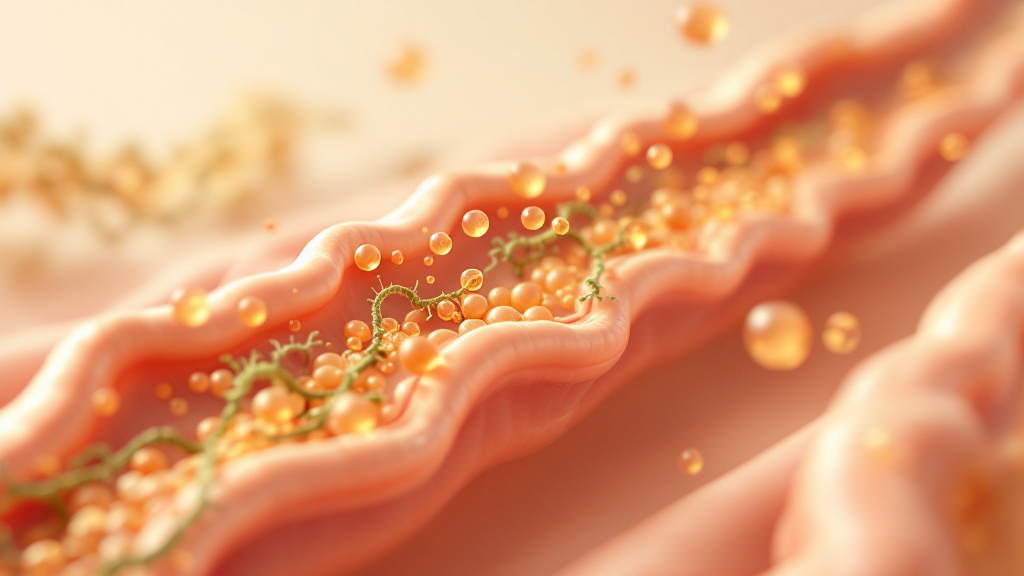
How your gut microbiome tunes GLP-1
Your gut isn't a passive tube — it's home to trillions of bacteria that participate directly in hormone signaling. Research over the last decade has mapped a genuine two-way relationship between the gut microbiota and GLP-1: the community of microbes in your intestine influences how much GLP-1 your L-cells release, and metabolic signals feed back the other way.24
The microbiome does this through several levers — fermenting the fiber you eat, shaping bile-acid metabolism, and affecting the gut barrier — all of which converge on how readily L-cells fire.4 The headline mechanism, and the best-studied one, runs through short-chain fatty acids.
The fiber → SCFA → GLP-1 chain
Here's the clearest, most cited path from what's on your plate to the hormone in your blood:
- You eat fiber — the fibrous, non-digestible carbohydrates in vegetables, legumes, whole grains and fruit that your own enzymes can't break down.
- Your bacteria ferment it — gut microbes digest that fiber and produce short-chain fatty acids (SCFAs) such as acetate, propionate and butyrate.
- SCFAs signal the L-cells — these SCFAs bind the receptors FFAR2 and FFAR3 (also called GPR43/GPR41) on L-cells, and that binding stimulates GLP-1 secretion.1
- GLP-1 goes up — the result is more of the same natural fullness-and-glucose signal your gut uses after any meal.
This is why "feed your gut" and "support your GLP-1" turn out to be closely related instructions. A diet that reliably reaches your lower gut with fermentable fiber gives your microbiome the raw material to keep the SCFA-to-GLP-1 pathway running.5
What this means for how you eat
You can't out-supplement a diet that starves your microbiome. The most consistent, evidence-aligned levers for supporting your gut's own GLP-1 signal are unglamorous and free:
- Fermentable fiber, daily — legumes, oats, vegetables, fruit and whole grains give bacteria the substrate to make SCFAs.5
- Diversity of plants — a wider range of fibers supports a wider, more resilient microbiome.
- Protein with meals — protein and its amino acids are themselves a direct, well-documented trigger for L-cell GLP-1 release.5
- Don't wreck the basics — sleep, movement and limiting ultra-processed food all shape the same gut environment.
Where salmon peptides fit
Here's the honest connection to what we do. Beyond fiber, specific food-derived proteins and marine peptides have been studied as triggers for the very same L-cell machinery. In laboratory gut-cell work, fish protein hydrolysates increased the body's own GLP-1 secretion.6 The point isn't to replace fiber or whole food — it's that certain bioactive peptides are being researched for supporting the same natural GLP-1 signaling your gut already runs.
Support your gut's own signal
triGLP is bioactive salmon peptides in four clean, sublingual ingredients — made to help support the natural GLP-1 signaling your gut already uses, not to replace it.
See the triGLP drops// ships from the official ORYGN storefront · dietary supplement · not a drug · results vary
The honest limits
The gut-to-GLP-1 connection is real and well documented, but scale matters: the GLP-1 your gut releases from food is a normal physiological signal, not the same magnitude as a prescription GLP-1 medication, and this page is not a substitute for one or for medical advice. Much of the mechanistic work — especially on specific fish and salmon peptides — is still early and done in cell and animal models; encouraging findings are not a promise for any one person. Salmon peptides are a dietary supplement, not a medicine — they don't treat, cure, or prevent any disease. We link the studies so you can judge for yourself, and individual results vary.
Common questions
Is GLP-1 made in the gut?
Yes. GLP-1 is a gut hormone released by enteroendocrine L-cells in the lining of your lower small intestine and colon in response to eating. The injectable medications are synthetic versions of this naturally occurring signal. Results vary by person.
How does gut health affect GLP-1?
Your gut microbiome helps regulate how much GLP-1 you release. When gut bacteria ferment dietary fiber, they produce short-chain fatty acids that bind receptors (FFAR2/FFAR3) on L-cells and stimulate GLP-1 secretion. A well-fed, fiber-fermenting microbiome supports that pathway; the research describes a two-way gut-microbiota–GLP-1 relationship.
Does fiber increase GLP-1?
Fermentable fiber supports it indirectly. Fiber itself isn't broken down by you, but your gut bacteria ferment it into short-chain fatty acids, and those SCFAs are documented triggers for L-cell GLP-1 release. That's why a fiber-rich, plant-diverse diet is one of the most evidence-aligned ways to support your gut's own signal. Results vary.
Do salmon or fish peptides affect GLP-1?
Certain food-derived peptides, including fish and marine protein hydrolysates, have been studied for supporting the same GLP-1 secretion that whole protein and SCFAs trigger. The research is still early and mostly in lab models, so it's support of a normal gut function — not a cure — and results vary.
References
- Short-chain fatty acids stimulate glucagon-like peptide-1 secretion via the G-protein-coupled receptor FFAR2. Diabetes, 2012. pubmed.ncbi.nlm.nih.gov/22190648
- Gut microbiota and glucagon-like peptide-1. Reviews in Endocrine and Metabolic Disorders, 2014. pubmed.ncbi.nlm.nih.gov/24789701
- The L-Cell in Nutritional Sensing and the Regulation of Appetite. Frontiers in Nutrition, 2015. pmc.ncbi.nlm.nih.gov/articles/PMC4507148
- Crosstalk between glucagon-like peptide 1 and gut microbiota in metabolic diseases. mBio, 2023. pubmed.ncbi.nlm.nih.gov/38055342
- Nutritional modulation of endogenous glucagon-like peptide-1 secretion: a review. Nutrition & Metabolism, 2016. pmc.ncbi.nlm.nih.gov/articles/PMC5148911
- Blue Whiting Protein Hydrolysates Increase GLP-1 Secretion and Proglucagon Production in STC-1 Cells. Nutrients, 2022. ncbi.nlm.nih.gov/pmc/articles/PMC8877066